
Hangxiety: Why Anxiety Can Feel Worse After Drinking
The evening felt manageable. You relaxed, talked more easily, and stopped thinking so much about what everyone else thought.
The next morning feels different. You replay conversations, check your messages, and wonder whether you said something wrong. Even when you cannot identify a problem, you feel unsettled.
That experience is often called hangxiety: anxiety that occurs during a hangover or as alcohol’s effects wear off. It can involve physical discomfort, racing thoughts, or a sense of dread that feels out of proportion to what happened.
Understanding the connection can help you respond to the immediate discomfort and recognize when drinking and anxiety are becoming part of a recurring pattern.
What Is Hangxiety?
Hangxiety is an informal term combining “hangover” and “anxiety.” It is not a separate medical diagnosis.
You might feel restless, irritable, unusually self-conscious, or unable to settle your thoughts after drinking. Those feelings may occur alongside more familiar hangover symptoms, such as headache, nausea, thirst, and fatigue.
As alcohol wears off, the brain’s adjustments to its calming effects can leave you feeling more anxious than before you drank. Disrupted sleep and physical discomfort can add to the experience. ¹
Hangxiety does not automatically mean you have an anxiety disorder or alcohol use disorder. It does mean the effect alcohol is having on you deserves attention.
Why Does Alcohol Feel Calming at First?
Alcohol changes signaling in the brain, including systems involved in slowing activity and producing relaxation. For a while, that can make tension or social discomfort feel less noticeable.
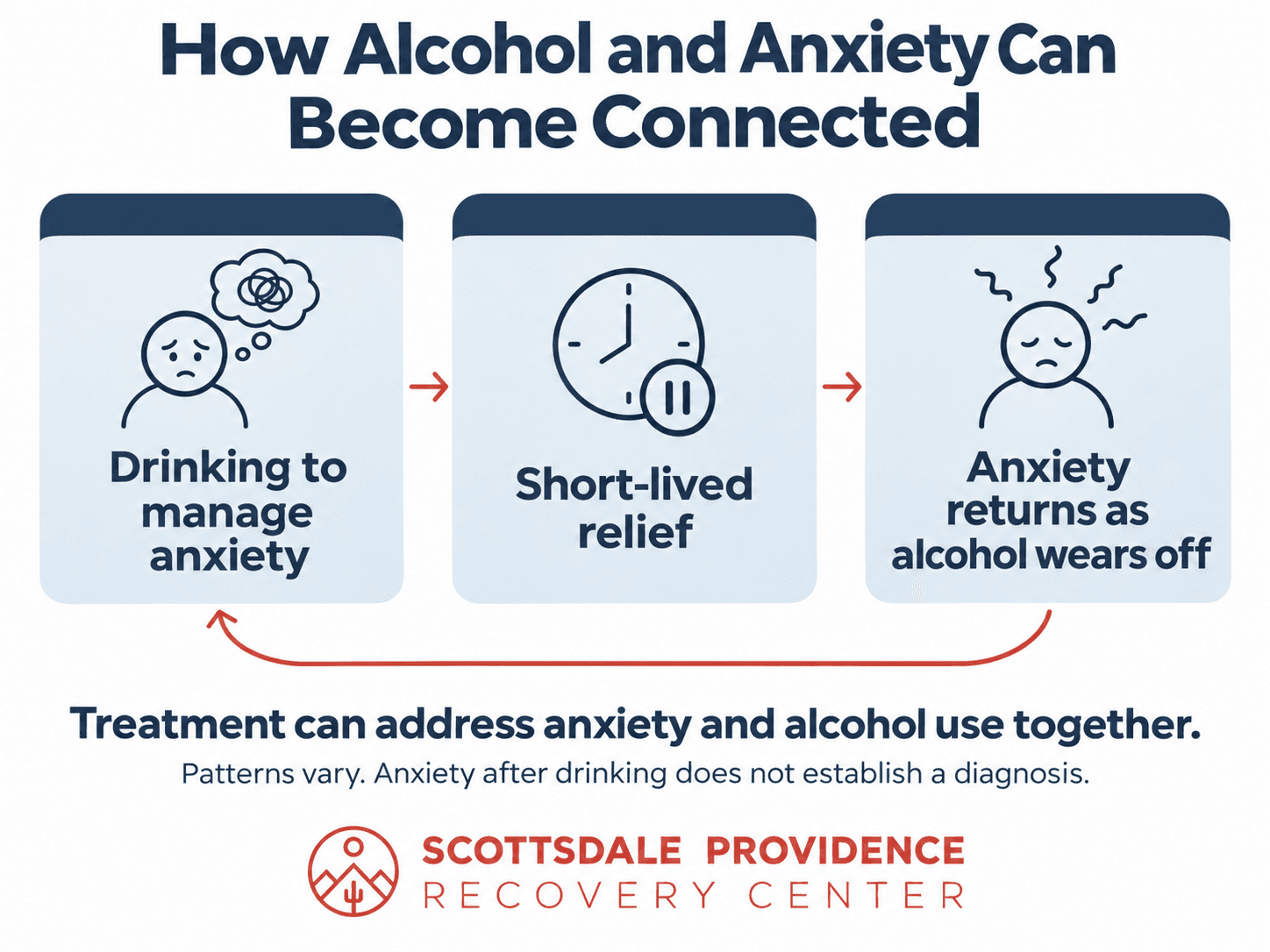
If you already feel anxious, that temporary relief can become something you rely on. Drinking may become how you get through a gathering, quiet worry after work, or feel comfortable talking to people.
But the immediate effect does not tell the whole story. Alcohol can temporarily reduce anxiety while contributing to anxiety later. When drinking becomes a regular coping strategy, it can be harder to recognize where the original anxiety ends and alcohol-related symptoms begin.
Why Do I Feel Anxious the Day After Drinking?
There may be several things happening at once.
Your nervous system is readjusting. The relaxation you felt while drinking can give way to restlessness as the effects wear off.
Your sleep may have been disrupted. Falling asleep quickly does not guarantee a restful night. Alcohol can fragment sleep and contribute to waking earlier.
You feel physically uncomfortable. Nausea, headache, and fatigue can make an already difficult morning feel harder to manage.
Then there is the meaning you give those sensations. You may start searching for a reason you feel so uneasy. A conversation you would normally forget becomes something you review repeatedly.
If parts of the evening are unclear, uncertainty may add another layer of worry. That concern deserves an honest look, without assuming that every anxious thought is evidence you did something wrong.
What Hangxiety Can Feel Like
People use the word to describe experiences such as:
- Replaying conversations or worrying about how they behaved.
- Feeling unusually embarrassed, guilty, or sensitive.
- Restlessness or difficulty relaxing.
- Irritability and feeling emotionally overwhelmed.
- Trouble concentrating while tired or physically uncomfortable.
- Feeling frightened by anxiety itself.
Some people describe panic after drinking. However, new or severe physical symptoms should not be assumed to be anxiety. Chest pain, difficulty breathing, fainting, or other concerning symptoms need prompt medical assessment.
How Long Does Hangxiety Last?
Drinking-related anxiety is often most noticeable the next day, but there is no dependable timeline for everyone. It may last longer, particularly when alcohol use continues or another health concern is involved.
Anxiety that persists for several days, worsens, or repeatedly appears when you stop drinking deserves professional assessment. It may involve withdrawal, an underlying anxiety condition, or another problem that needs attention.
You do not have to wait several days to ask for help. The severity of your symptoms and your drinking history matter more than reaching a particular hour on the clock.
Hangxiety and Alcohol Withdrawal Are Not the Same Thing
A hangover can happen after an episode of drinking. Alcohol withdrawal can develop when someone who drinks heavily and regularly stops or substantially reduces alcohol.
Symptoms overlap, so anxiety alone cannot tell you which is happening. Shaking, sweating, vomiting, or a rapid heartbeat after cutting back warrant prompt medical advice, especially with regular heavy drinking. Seizures, hallucinations, or severe confusion require emergency care.
Do not use the label “hangxiety” to dismiss symptoms that are worsening or unfamiliar. If you may be physically dependent on alcohol, seek medical guidance before abruptly stopping. A clinician can help you plan a safe next step.
What Can Help During an Anxious Morning?
First, consider whether your symptoms need medical attention. Home comfort measures are not a substitute for withdrawal assessment or care for severe symptoms.
If there are no signs of an urgent medical problem, give yourself room to recover. Sip water, eat something you can tolerate, and keep demands manageable. These steps may support comfort, but they do not reverse alcohol’s effects or treat the underlying pattern.
Drinking more alcohol to relieve the discomfort can prolong the problem. Coffee, showers, and products marketed as hangover cures do not speed the brain’s recovery.
Be Careful With Caffeine and Medication
Extra coffee or energy drinks may make an anxious morning more uncomfortable. Caffeine can worsen anxiety symptoms in some people.
Do not take extra doses of anxiety medication, someone else’s prescription, or sedatives to manage the feeling. Alcohol can interact dangerously with some anxiety and sleep medicines, including by suppressing breathing. If you take prescribed medication and have been drinking, ask your clinician or pharmacist how to take it safely.
Give the Worry Some Perspective
Try separating what you know from what you fear. “I feel embarrassed” and “I harmed a relationship” are different statements. If there is something specific to address, you can return to it when you feel clearer.
You might also tell someone you trust: “I am feeling anxious after drinking, and I could use some company.” You do not need to justify asking for support.
When Anxiety Was There Before the Drinking
Perhaps the morning anxiety is familiar because you experience it on other days, too. Drinking may have become a way to manage social situations, persistent worry, or tension you cannot switch off.
A clinician can help explore when symptoms began, how they relate to drinking, and what happens when alcohol is no longer part of the picture. You do not need to determine the diagnosis yourself before seeking support for anxiety.
People also respond differently to alcohol. If friends seem unaffected while you feel distressed, that does not make your experience less real. Research has found greater next-day anxiety among highly shy participants, although that finding cannot predict any individual’s response.
Treatment can address anxiety symptoms while examining the role alcohol has taken in managing them. Treating only one concern may leave the other part of the pattern unresolved.
Can You Prevent Hangxiety?
Avoiding alcohol removes the alcohol-related trigger for hangxiety. It may not resolve an underlying anxiety condition, which deserves its own assessment and support.
If drinking has become your way to feel comfortable, socialize, or settle down, prevention also means developing other ways to meet those needs. Therapy can help you work through anxious thoughts, practice coping skills, and build confidence without relying on alcohol.
If you drink heavily or regularly, or have experienced withdrawal before, make that change with medical guidance. Suddenly stopping prolonged heavy alcohol use can cause dangerous withdrawal.
When Hangxiety Keeps Happening
A repeated pattern is worth discussing even if you continue meeting your responsibilities.
You may notice that you promise yourself the experience will not happen again, then find yourself facing another anxious morning. Perhaps you avoid plans, lose time recovering, or reach for alcohol because you want the feeling to stop.
The useful question becomes: What is drinking helping me manage in the moment, and what is it costing me afterward?
You do not need to wait until the consequences become more severe. An assessment can help clarify whether you need anxiety treatment, alcohol treatment, or a combination of supports.
Support for Anxiety and Alcohol Use Together
At Scottsdale Providence Recovery Center, dual diagnosis treatment addresses co-occurring mental health and substance use concerns within an integrated plan. Assessment, therapy, psychiatric support, and recovery planning help the team understand how those concerns affect your daily life.
If anxiety and alcohol have become connected, Scottsdale Providence Recovery Center can help you understand the full pattern and find an appropriate level of support.
Connect with admissions to discuss what you have been experiencing.
Author
Victoria Yancer
Victoria writes thoughtful, compassionate content for the behavioral health space. She brings clarity to complex topics and creates messaging that helps people feel informed, understood, and supported as they explore treatment options.

Clinical Reviewer
Daniel Nichols, LCSW
Dan is a Licensed Clinical Social Worker with over 17 years in behavioral health and addiction treatment. His trauma-informed approach blends evidence-based therapies with hope, purpose, and community.
Related articles
Serotonin Syndrome: Causes, Symptoms, Treatment & Prevention
Serotonin syndrome can escalate within hours. Recognize the symptoms, medication interactions, treatments, and signs that require emergency care.
Using Drugs and Alcohol to Cope With Depression and Anxiety
Learn why drugs and alcohol may feel like relief from depression or anxiety, how the cycle can worsen both, and when integrated treatment can help.
What Is Dual Diagnosis Treatment? Integrated Care for Addiction and Mental Health
Understand how dual diagnosis treatment brings addiction and mental health care together, what to expect, and whether it fits your needs.
National Eating Disorders Awareness Week: Eating Disorders and Addiction
National Eating Disorders Awareness Week highlights the link between eating disorders, addiction, trauma, and the need for integrated treatment in recovery.