

Emotional Relapse: Warning Signs That Can Appear Before Substance Use
You have not used. You may not even want to. But lately, you have stopped answering calls, missed appointments, or found yourself getting irritated by things you usually handle differently.
Because substances are not part of the picture, it can be easy to tell yourself nothing is wrong. Still, something about daily life feels harder, and the support that helped you feel steady is becoming less consistent.
Emotional relapse describes a pattern of emotional strain and changes in behavior that may increase vulnerability to returning to substance use. Recognizing that pattern allows you to ask for support before things become harder to manage.
What Is Emotional Relapse?
Emotional relapse is a term used in relapse prevention to describe a period when emotional needs, coping skills, and recovery routines are being neglected, even though you may not be thinking about using.
It can involve withdrawing from supportive people, keeping difficult feelings to yourself, or letting sleep and self-care slip. The concern is the growing pattern, rather than any single difficult day. ¹
The term is a recovery framework, not a standalone diagnosis. Feeling angry, tired, or overwhelmed does not automatically mean you are in emotional relapse. Those experiences deserve attention without being treated as evidence that substance use is inevitable.
Can You Be in Relapse Without Thinking About Substances?
You can experience early warning patterns without cravings or plans to use. That is what the term emotional relapse is meant to help you recognize.
You might feel certain that you will remain sober while also becoming increasingly disconnected from the people and habits that support your recovery.
For example, you may cancel therapy because work is busy, stop talking about stress because you do not want to worry anyone, and spend evenings alone because you feel exhausted. Each choice may seem understandable. Together, they are worth discussing with someone who knows your recovery.
You do not have to wait for a desire to drink or use before taking those changes seriously.
Emotional, Mental, and Physical Relapse: What Is the Difference?
One way to understand the stages of relapse is to separate changes in emotional well-being, thoughts about using, and substance use itself.
Stage | What it describes |
Emotional relapse | Emotional strain and reduced attention to recovery needs, without necessarily thinking about using. |
Mental relapse | Conflict about using, which may include cravings, minimizing past consequences, or bargaining about controlled use. |
Physical relapse | An actual return to substance use. |
These distinctions can help identify opportunities for support. They are not a fixed sequence that everyone follows, and warning signs do not always progress to substance use. ¹
An unwanted thought about using also does not, by itself, mean you have failed. What matters is being able to discuss it honestly and respond with support.
Early Signs of Emotional Relapse
Emotional relapse signs often look like changes in ordinary life. Pay attention to what is becoming different from your usual patterns:
- Withdrawing from supportive people: Leaving messages unanswered or avoiding people you normally trust.
- Skipping recovery routines: Missing therapy, meetings, or other supports without replacing them.
- Poor sleep or irregular eating: Staying up late, skipping meals, or struggling to maintain a daily rhythm.
- Bottling up emotions: Saying everything is fine while avoiding conversations about grief, anger, fear, or disappointment.
- Increased irritability or resentment: Feeling persistently frustrated, misunderstood, or angry with others.
- Overworking or staying constantly busy: Filling every available hour so there is little room to rest or notice how you feel.
- Neglecting basic self-care: Letting hygiene, medical appointments, movement, or other needs fall away.
- Becoming defensive about changes: Finding it difficult to hear concern or discuss why routines have shifted.
- Feeling exhausted or disconnected: Going through the motions while feeling emotionally distant from yourself or others.
These signs can also occur with depression, anxiety, burnout, medical conditions, or major life changes. They are reasons to check in, not a checklist that proves relapse is coming.
A useful question is: Am I having a difficult stretch, and am I still letting people help me through it?
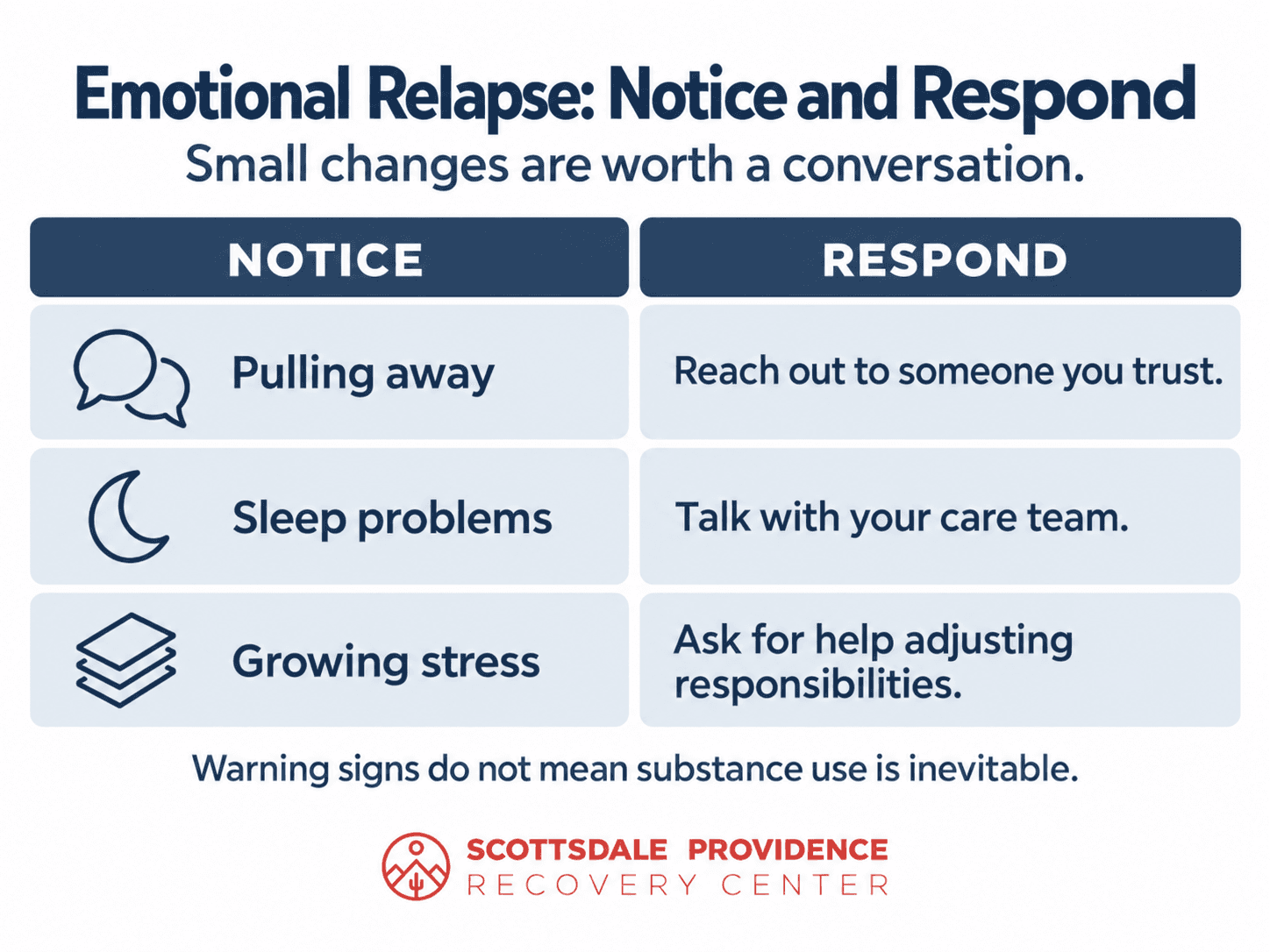
Why Isolation, Poor Sleep, and Emotional Suppression Matter
These patterns can reinforce one another. You may sleep poorly, feel less patient the next day, avoid a conversation, and then carry the stress into another restless night.
Isolation Makes It Harder to Share What Is Happening
Time alone can be restorative. The concern is when solitude becomes a way to avoid support or conceal how much you are struggling.
Consider whether you are choosing quiet time and returning to connection, or becoming harder to reach while feeling increasingly overwhelmed.
Poor Sleep Can Affect Emotional Regulation
Sleep loss can make it harder to manage emotions, think clearly, and cope with change. When you are already under strain, those difficulties can make daily recovery practices feel more demanding. ²
Persistent sleep problems deserve clinical attention. Our article on insomnia and anxiety during recovery explores that connection in more detail.
Unspoken Feelings Can Leave Needs Unaddressed
You may worry that admitting anger or sadness will disappoint people who are proud of your recovery. You may also believe you should be doing better by now.
That can make it harder to ask for what you need. Sharing a feeling does not require having an explanation or solution ready. “I have been overwhelmed, and I do not know what to do with it yet” is enough to begin.
How Stress and Resentment Can Weaken Recovery
Stress can increase cravings and vulnerability to substance use, particularly when coping resources are stretched. Its effects vary, and stress does not make a return to use inevitable. ³
Resentment may be a clue that something needs attention: an unresolved conflict, an uncomfortable boundary, or responsibilities that have become unsustainable.
Imagine agreeing to extra shifts, helping everyone at home, and canceling your own appointments to keep up. Eventually, you may feel angry that nobody understands how much you are carrying.
The next step is to name what has become difficult and work out what needs to change. That might involve a conversation, a boundary, or additional clinical support.
What to Do When Warning Signs Appear
You do not have to rebuild every routine at once. Begin with actions that make honest connection and practical support easier.
Tell Someone What Has Changed
Contact your therapist, recovery support person, or another trusted person. Be specific:
“I have missed two appointments, I am not sleeping well, and I have been avoiding everyone. I am not planning to use, but I need help getting back on track.”
That gives the other person something concrete to respond to.
Reconnect With a Support You Have Been Missing
Reschedule an appointment, return to a recovery group that fits your needs, or arrange time with someone you trust.
If a particular support is no longer helpful or accessible, discuss an alternative. The goal is meaningful connection rather than attending something simply to check a box.
Address the Pressure Behind the Pattern
Look at what changed before you began withdrawing. Was there a conflict, a loss, a schedule change, or a worsening mental health symptom?
Bring that issue into treatment. Restoring routines matters, but the underlying strain may need attention, too.
Make Basic Needs More Manageable
Choose a realistic next step: a regular meal, a consistent bedtime, or a break from an unnecessary commitment. Seek medical guidance for persistent sleep or appetite changes.
Then review your existing relapse prevention plan with your support team. Use it to identify which responses fit what is happening now.
How Loved Ones Can Respond Without Becoming Controlling
Family members may notice changes before the person recognizes a pattern. Approach the conversation with observations rather than a label.

Try: “You have seemed exhausted, and we have not talked much lately. How are you doing?”
Avoid announcing, “You are in emotional relapse,” or treating every mood change as evidence of substance use.
Ask what help would be useful. That could mean transportation to an appointment, help with a practical responsibility, or space for a conversation.
Agree on check-ins rather than demanding constant updates. You can express concern, maintain your own boundaries, and encourage professional support while respecting the person’s choices.
When Professional Support May Be Needed
Contact a treatment professional when warning signs persist, daily functioning becomes harder, or your usual supports are no longer enough. Increasing cravings, thoughts about obtaining substances, or concern that you may use soon warrant prompt contact with your treatment team.
A clinician can help assess whether the changes relate to recovery needs, depression, anxiety, trauma, sleep problems, or a combination of concerns.
Depending on that assessment, support may include:
- Outpatient treatment for structured therapy while living at home.
- Evening IOP when additional structure needs to fit around daytime responsibilities.
- Residential treatment when a more intensive, supported setting is clinically appropriate.
Emotional relapse signs alone do not determine the level of care you need. That decision should account for your symptoms, safety, daily functioning, and current support.
Ask for Support Before Substance Use Occurs
You do not have to wait for substance use to occur before asking for help. If the early warning signs are becoming harder to interrupt, Scottsdale Providence Recovery Center can help you understand the available support.
Connect with admissions to discuss what has changed and explore treatment options that fit your needs.
Frequently Asked Questions
It may feel like irritability, exhaustion, resentment, or disconnection while you continue to avoid substances. You may notice that you are keeping more to yourself or struggling to maintain routines that previously helped.
There is no set duration. The term describes a pattern rather than a condition with a fixed timeline. Seek support when changes persist or become harder to manage instead of waiting to see how long they last.
No. Emotional relapse refers to warning patterns in emotional well-being and behavior. Physical relapse refers to an actual return to substance use.
One relapse prevention framework describes emotional, mental, and physical relapse. These involve changes in coping and self-care, conflict about using, and an actual return to use. Everyone’s experience does not follow the same sequence.
Early action may help interrupt the pattern. Tell someone what has changed, reconnect with appropriate supports, address unmet needs, and seek professional guidance when necessary. These steps can reduce risk, but no approach guarantees prevention.
Family members may notice withdrawal, missed appointments, irritability, or changes in routines. Those observations can start a supportive conversation, but they cannot confirm emotional relapse or predict substance use on their own.

Author
Victoria Yancer
Victoria writes thoughtful, compassionate content for the behavioral health space. She brings clarity to complex topics and creates messaging that helps people feel informed, understood, and supported as they explore treatment options.

Clinical Reviewer
Daniel Nichols, LCSW
Dan is a Licensed Clinical Social Worker with over 17 years in behavioral health and addiction treatment. His trauma-informed approach blends evidence-based therapies with hope, purpose, and community.
Related articles

How to Rebuild Trust After Addiction: Honesty, Boundaries, and Relationship Repair

Measuring Progress: Scottsdale Providence 2026 Treatment Outcomes
See Scottsdale Providence’s 2026 treatment outcomes for self-reported depression and anxiety symptoms across residential, PHP, and IOP care.

Residential vs. Outpatient Treatment: How to Know Which Level of Care You Need
Compare residential vs. outpatient treatment, including structure, flexibility, support, and how to choose the right level of care for your needs.

Finding Mental Health Care That Helps You Move Forward
Learn how individualized mental health treatment considers your symptoms, daily functioning, goals, and level of support to help you move forward.