

Measuring Progress: Scottsdale Providence 2026 Treatment Outcomes
Depression and anxiety can make recovery harder at every step. They can affect sleep, motivation, relationships, decision-making, and a person’s ability to remain engaged in change. That is why Scottsdale Providence Recovery Center treats mental health as an essential part of recovery, not as a separate concern.
In 2026, Scottsdale Providence Recovery Center reviewed three years of outcomes from clients receiving residential and PHP/IOP care. The results showed clear decreases in self-reported depression and anxiety symptoms from admission to discharge.
The numbers do not tell every client’s story, but they provide meaningful insight into the progress people reported while receiving structured, individualized care.
Residential Treatment Outcomes
The residential review included 106 clients over a three-year period.
From admission to discharge:
- Depression symptoms decreased by an average of 66.03%.
- Anxiety symptoms decreased by an average of 67.83%.
Average depression scores decreased from 17.28 upon admission to 5.87 upon discharge. Average anxiety scores decreased from 15.08 to 4.85.
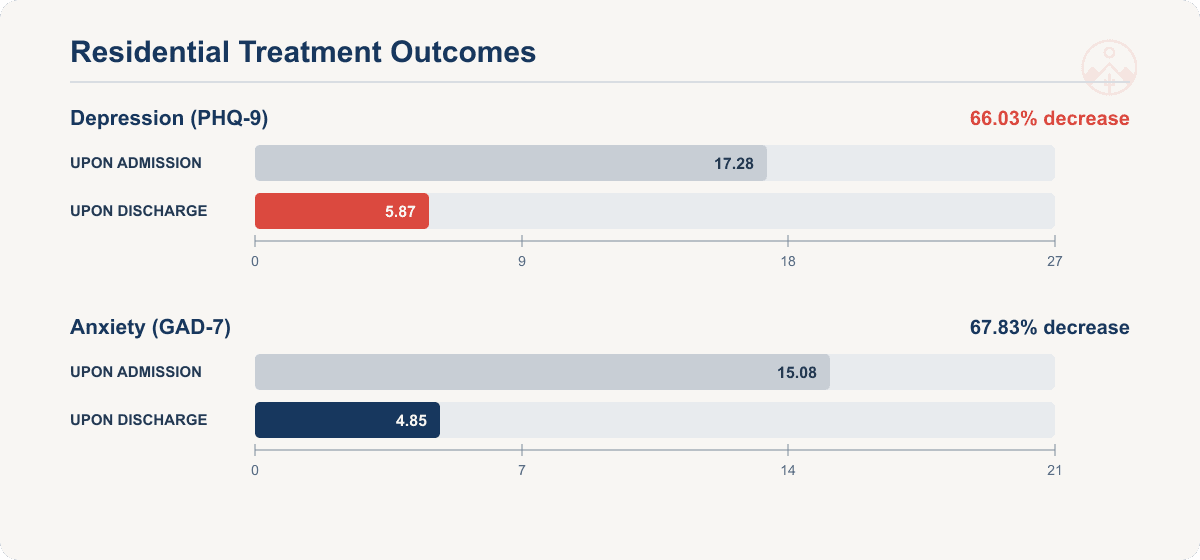
These numbers represent more than movement on a chart. They reflect people entering treatment while carrying very real emotional pain and reporting fewer symptoms by the time they completed residential care.
Residential treatment gives clients the opportunity to step away from the pressures, triggers, and patterns that may be keeping them stuck. Within a supportive environment, they can begin understanding the connection between substance use, mental health, relationships, past experiences, and daily behavior.
At Scottsdale Providence Recovery Center, residential treatment combines structure with individualized care. Clients are supported as they develop healthier coping skills, address co-occurring mental health concerns, rebuild trust, and prepare for life beyond treatment.
Progress Through PHP and IOP
Recovery continues when a person begins carrying new skills into everyday life.
Partial hospitalization and intensive outpatient programming provide meaningful clinical support while allowing clients to navigate responsibilities, relationships, and real-world challenges outside of treatment.
Scottsdale Providence’s PHP/IOP review included 107 clients over a three-year period.
From admission to discharge:
- Depression symptoms decreased by an average of 48.60%.
- Anxiety symptoms decreased by an average of 46.18%.
Average depression scores decreased from 11.50 upon admission to 5.91 upon discharge. Average anxiety scores decreased from 11.15 to 6.00.
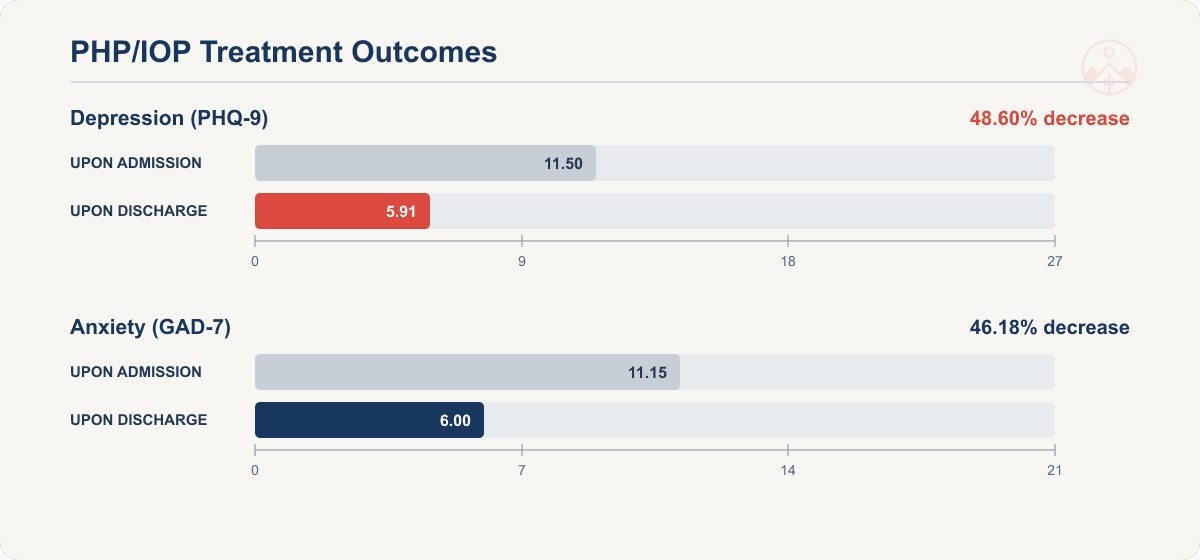
These results show that clients reported meaningful decreases in both depression and anxiety symptoms while participating in outpatient care.
The PHP and IOP results should not be viewed as a direct comparison with residential treatment. Each level of care serves people with different needs and provides a different amount of structure. What matters is whether clients are making progress within the level of support that is appropriate for them.
Through our outpatient programs, clients can continue building stability while practicing recovery in their daily lives. Treatment may include individual therapy, group support, psychiatric care, relapse-prevention planning, and support for co-occurring mental health concerns.
Why Depression and Anxiety Matter in Recovery
Substance use rarely exists in isolation.
Depression can make it difficult to imagine that life will improve. Anxiety can make everyday situations feel overwhelming or unsafe. When these symptoms are not addressed, substances may begin to feel like the only available way to escape, cope, sleep, connect, or get through the day.
That is why effective treatment looks beyond substance use alone.
We help clients understand the emotional and behavioral patterns influencing their lives. Treatment focuses on the whole person, including mental health, relationships, physical well-being, past experiences, current responsibilities, and the environment a client will return to after treatment.
A decrease in depression or anxiety symptoms does not tell the entire story of recovery. It can, however, represent an important shift. When emotional distress becomes more manageable, people may have greater capacity to participate in therapy, connect with others, make thoughtful decisions, and continue practicing the skills that support long-term recovery.
How the Results Were Measured
Scottsdale Providence used two established self-report tools to measure changes in depression and anxiety symptoms:
- The PHQ-9 measures reported symptoms of depression.
- The GAD-7 measures reported symptoms of anxiety.
Clients completed these assessments upon admission and upon discharge. Lower scores indicate fewer reported symptoms.
The PHQ-9 and GAD-7 are commonly used to help clinicians understand symptom severity and monitor changes over time.
These tools provide valuable information, but they do not define a person or capture every part of recovery. They are also not substitutes for a complete clinical evaluation.
What the Outcomes Tell Us
The results show that clients reported fewer symptoms of depression and anxiety, on average, between admission and discharge.
They do not guarantee that every client will have the same experience. Each person enters treatment with a different history, support system, diagnosis, level of engagement, and set of needs.
The numbers also cannot fully capture the moments that may matter most to an individual. Progress might look like setting a boundary, repairing a relationship, asking for help, returning to work, managing a difficult day without using substances, or recognizing personal strengths that had been buried beneath years of pain.
Outcomes measurement gives us one valuable perspective. The human experience behind those numbers gives them meaning.
Care That Changes as You Grow
The right level of care depends on where a person is today and what will help them move forward safely.
Some people need the stability and around-the-clock support of residential treatment. Others benefit from PHP or IOP, where they can receive structured care while remaining connected to everyday life. As needs change, treatment should be able to change too.
Scottsdale Providence provides a connected path through multiple levels of care so clients can continue receiving support as they build greater independence.
The 2026 outcomes are encouraging, but they are not the end of the work. We are committed to listening, measuring progress, strengthening care, and helping each person build a recovery that can continue beyond treatment.
Recovery Can Begin With a Conversation
You do not need to know exactly what kind of treatment you need before asking for help.
If substance use, depression, anxiety, or a combination of concerns is affecting your life, our admissions team can listen to what you are experiencing and help you understand the options available.
The first step does not have to be a perfect plan. It can simply be an honest conversation.
Contact Scottsdale Providence Recovery Center to speak confidentially with someone who understands.
These findings reflect group averages from SPRC’s 2026 review of three years of client outcomes. Individual experiences and treatment results vary. The PHQ-9 and GAD-7 are self-report measurement tools and do not replace a comprehensive clinical evaluation.

Author
Victoria Yancer
Victoria writes thoughtful, compassionate content for the behavioral health space. She brings clarity to complex topics and creates messaging that helps people feel informed, understood, and supported as they explore treatment options.

Clinical Reviewer
Daniel Nichols, LCSW
Dan is a Licensed Clinical Social Worker with over 17 years in behavioral health and addiction treatment. His trauma-informed approach blends evidence-based therapies with hope, purpose, and community.
Related articles

Residential vs. Outpatient Treatment: How to Know Which Level of Care You Need
Compare residential vs. outpatient treatment, including structure, flexibility, support, and how to choose the right level of care for your needs.

Finding Mental Health Care That Helps You Move Forward
Learn how individualized mental health treatment considers your symptoms, daily functioning, goals, and level of support to help you move forward.

Early Sobriety and Hormones: Why Your Body Needs Time to Regulate
Feeling anxious, exhausted, or unlike yourself in early sobriety? Understand how hormones, sleep, and mood can shift and when to seek support.

A Decade of Grit: Scottsdale Providence Celebrates Its 10-Year Anniversary
Scottsdale Providence reflects on 10 years of grit, growth, clinical honesty, and whole-person care for addiction, mental health, and dual diagnosis recovery.