

Does Marijuana Really Help You Sleep? What Cannabis Does to Sleep Quality
When your body is tired but your mind will not settle, marijuana can feel like one of the few things that helps. You may fall asleep faster, feel less aware of anxious thoughts, or believe you sleep more deeply after using it.
That relief can feel very real. It does not always mean marijuana is improving the quality of your sleep.
Cannabis can change how quickly you fall asleep, how alert you feel at night, and how you experience different stages of sleep. The effects vary based on the amount used, THC and CBD concentrations, frequency of use, tolerance, mental health, medications, and the reason you are having trouble sleeping.
For some people, occasional marijuana use may appear to make falling asleep easier. With regular use, however, the brain can begin adapting to its effects. Sleep may then become increasingly difficult without it.
What Happens When You Sleep High?
When you sleep high, THC is still affecting areas of the brain involved in alertness, memory, mood, and the sleep-wake cycle. You may feel sedated and fall asleep sooner, but sedation is not necessarily the same as healthy, restorative sleep.
Cannabis may affect:
- How long it takes to fall asleep
- How often you wake during the night
- The amount of time spent in different sleep stages
- Dreaming and dream recall
- Morning alertness and concentration
- How easily you can sleep without using marijuana
People can respond very differently. One person may feel relaxed and sleepy, while another experiences anxiety, a racing heart, paranoia, or greater restlessness. Products with different amounts of THC and CBD can also produce different effects.
Does Marijuana Help You Fall Asleep?
Marijuana may help some people feel sleepy or fall asleep faster in the short term. THC can produce relaxation and sedation, particularly at certain doses. This can make it appealing to someone dealing with insomnia, physical discomfort, anxiety, trauma-related hyperarousal, or persistent thoughts at bedtime.
However, research on cannabis as a sleep aid remains mixed. Some studies report improvements in how people describe their sleep, while objective measurements do not always show the same improvement in sleep structure or quality.
The answer also changes depending on what is being studied. A controlled cannabinoid product used under medical supervision is not the same as regularly smoking, vaping, or consuming a high-potency recreational product before bed.
Feeling as though you fell asleep quickly is only one part of sleep health. The larger question is whether you remain asleep, move through normal sleep cycles, wake feeling restored, and can sleep without depending on a substance.
Does Sleeping High Affect Sleep Quality?
It can. Cannabis may change normal sleep patterns, although its effects are not identical for everyone.
Sleep is made up of multiple stages that support physical restoration, learning, memory, emotional processing, and other essential functions. Cannabis, particularly THC, may affect how much time the brain spends in these stages.
Research has associated cannabis use with changes in:
- Rapid eye movement, or REM, sleep
- Dream frequency and recall
- Time needed to fall asleep
- Total sleep duration
- Nighttime awakenings
- Morning grogginess
- Perceived sleep quality
Some short-term studies suggest THC may reduce REM sleep or dream recall. However, sleep research involving cannabis remains limited, and findings vary based on the product, dose, timing, and pattern of use. Claims that marijuana consistently creates “deeper” or more restorative sleep go beyond what current evidence can establish.
Someone may be unconscious for several hours and still wake feeling mentally foggy, emotionally unsettled, or poorly rested.
Why Do You Dream Less When You Sleep High?
Some people notice that they rarely remember dreams when using marijuana regularly. THC may alter REM sleep, the stage most closely associated with vivid dreaming.
Dream recall is not a perfect measurement of sleep quality, and not remembering a dream does not prove that no dreaming occurred. Still, changes in dreaming are commonly reported with regular cannabis use.
When someone reduces or stops marijuana after frequent use, vivid dreams may return. This is sometimes described as REM rebound. Dreams may feel unusually intense, emotional, or realistic while the brain adjusts.
For someone who began using marijuana to avoid nightmares, this rebound can be especially uncomfortable. Trauma-related dreams deserve thoughtful clinical attention rather than judgment. Treating the underlying trauma may provide a more sustainable path than relying only on nightly sedation.
Learn how Scottsdale Providence Recovery Center approaches trauma treatment.
Can You Build a Tolerance to Marijuana for Sleep?
Yes. With frequent use, the body can become less responsive to the same amount of THC. Someone may begin using more, choosing stronger products, or using earlier in the evening to recreate the effect that once helped them fall asleep.
This pattern can develop gradually. What began as an occasional solution may become something a person believes they cannot sleep without.
Possible signs of increasing tolerance or dependence include:
- Needing more marijuana to feel sleepy
- Choosing products with higher THC concentrations
- Using marijuana every night or multiple times each evening
- Feeling anxious about sleeping without it
- Trying to reduce use but returning because of insomnia
- Continuing to use despite morning fog, memory problems, anxiety, or other consequences
- Organizing evening routines around access to marijuana
Dependence is not defined by how marijuana compares with another substance. The important question is how it is affecting your control, health, relationships, responsibilities, and ability to function without it.
Learn more about marijuana addiction and available treatment.
Why Is It Hard to Sleep After Stopping Marijuana?
Sleep difficulty is a common cannabis withdrawal symptom, particularly after frequent or heavy use. The brain has adapted to falling asleep while THC is present. When marijuana is removed, the sleep-wake system needs time to adjust.
During this period, someone may experience:
- Difficulty falling asleep
- Frequent nighttime waking
- Vivid or disturbing dreams
- Restlessness
- Night sweats
- Irritability
- Anxiety
- Changes in appetite
- Strong urges to use marijuana again
These symptoms can make it feel as though marijuana was the only thing allowing sleep. In reality, some of the immediate sleeplessness may be part of withdrawal.
Sleep problems can begin within the first few days after stopping and may continue for several weeks in some people. The experience depends on frequency of use, THC potency, individual health, other substance use, and whether anxiety, trauma, depression, or a sleep disorder is also present.
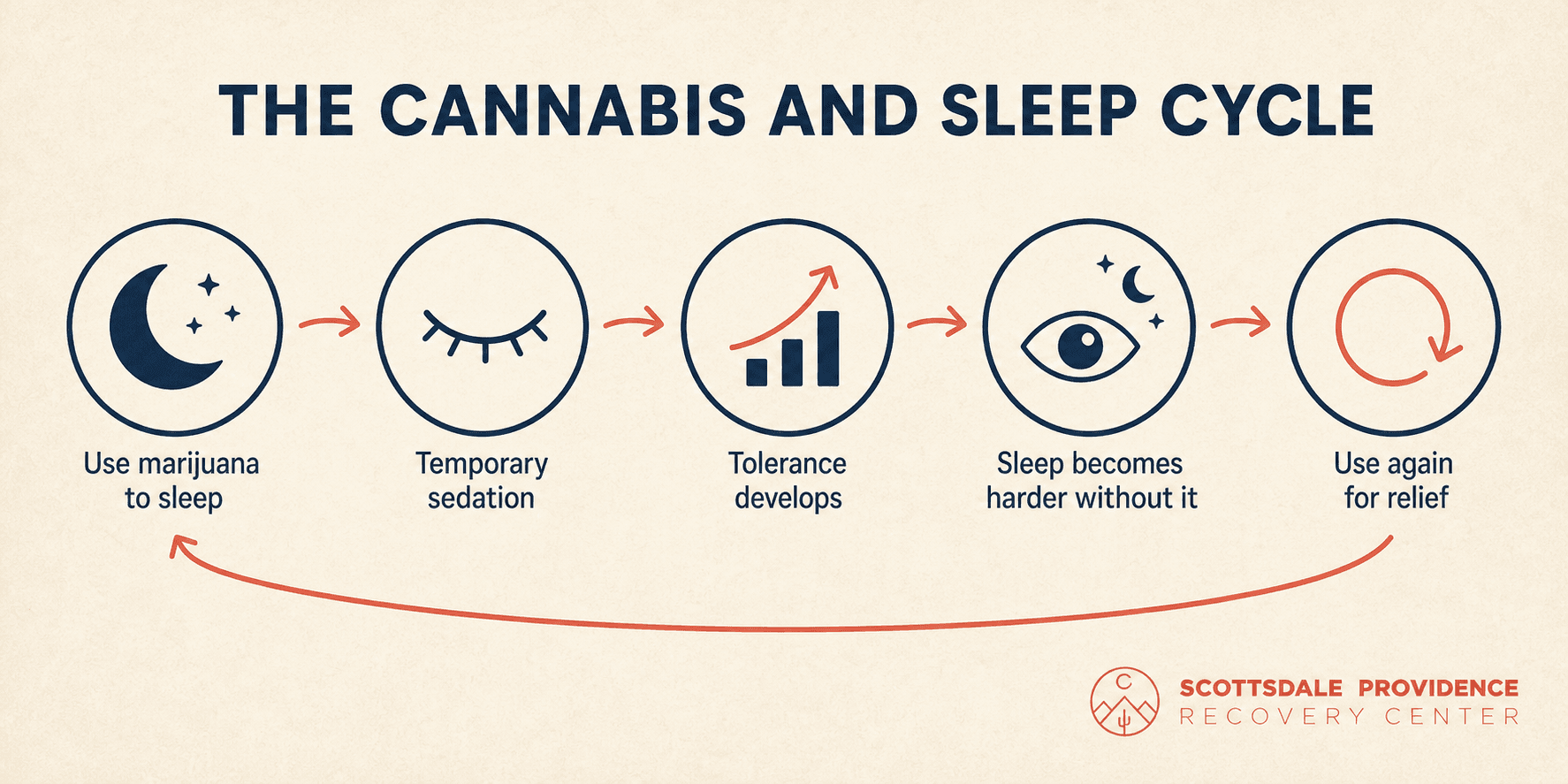
Returning to marijuana may bring temporary relief, but it can restart the same cycle:
Use marijuana to sleep → develop tolerance → struggle to sleep without it → use again for relief
Understanding this cycle can help reduce shame. Difficulty sleeping after stopping is not evidence that you are incapable of sleeping naturally. It may mean your body needs time and appropriate support to regulate again.
Read more about marijuana withdrawal symptoms and coping.
Could Marijuana Be Masking the Real Cause of Poor Sleep?
Sometimes marijuana use is less about sleep itself and more about what becomes difficult to tolerate when the day gets quiet.
At bedtime, there are fewer distractions. Anxiety may become louder. Memories may surface. Physical tension may become more noticeable. Depression can disrupt the body’s rhythms, and trauma can leave the nervous system feeling watchful even in a safe room.
Someone may be using marijuana to manage:
- Anxiety or racing thoughts
- Trauma-related hyperarousal
- Nightmares
- Depression
- Chronic stress
- Physical discomfort
- Loneliness
- Grief
- Another substance’s effects
- An undiagnosed sleep disorder
If marijuana is the only strategy helping you get through the night, that does not mean you have done something wrong. It may mean there is an underlying concern that has not received enough support.
Treating the cause of poor sleep can be more effective than repeatedly trying to suppress the symptom.
Explore mental health treatment at Scottsdale Providence Recovery Center.
Marijuana, Anxiety, and the Sleep Cycle
Marijuana may temporarily quiet anxiety for some people. For others, especially at higher THC doses, it can increase worry, panic, paranoia, or physical sensations such as a rapid heartbeat.
This creates a complicated relationship with sleep. Someone may use marijuana because anxiety keeps them awake, then experience greater anxiety as tolerance, withdrawal, or the effects of high-potency THC develop.
The connection can become difficult to untangle:
- Anxiety interferes with sleep
- Marijuana provides short-term relief
- Regular use increases tolerance
- Sleeping without marijuana becomes harder
- Withdrawal intensifies anxiety and sleeplessness
- Marijuana feels increasingly necessary
Addressing anxiety and cannabis use together can help identify what is maintaining the cycle. Integrated treatment does not require clinicians to dismiss the relief someone has experienced. It looks honestly at both the short-term benefit and the longer-term cost.
Learn about integrated dual diagnosis treatment.
How Can You Tell If Marijuana Has Become a Sleep Dependency?
Using marijuana before bed does not automatically mean someone has cannabis use disorder. A pattern becomes more concerning when control is decreasing or use continues despite meaningful consequences.
Consider asking yourself:
- Can I sleep without marijuana?
- Have I needed more THC over time?
- Do I become irritable, restless, or anxious when I try to stop?
- Have I tried to reduce my use without success?
- Do I feel foggy or unmotivated the next morning?
- Is marijuana affecting my memory, mood, work, school, or relationships?
- Am I using it to avoid thoughts, feelings, memories, or nightmares?
- Do I continue using even though it sometimes makes my anxiety worse?
- Does the thought of not having marijuana at night make me panic?
A few honest answers can reveal more than a label. If marijuana no longer feels optional, it may be time to look at the role it is playing.
What Can Help You Sleep Without Marijuana?
Improving sleep after regular marijuana use usually takes more than removing the substance. The body may need time to adjust, and the original cause of the sleep problem still needs attention.
Helpful support may include:
- A consistent sleep and wake time
- Morning light exposure
- Regular daytime movement
- Reducing caffeine later in the day
- A quieter transition into bedtime
- Keeping phones and stimulating content out of bed
- Therapy for anxiety, depression, grief, or trauma
- Cognitive behavioral therapy for insomnia
- Medical evaluation for persistent sleep problems
- Support for cannabis withdrawal and cravings
- Psychiatric evaluation when mood or anxiety symptoms are present
Trying to replace marijuana with alcohol, sedatives, or someone else’s prescription medication can create additional risks. Medication questions should be discussed with a qualified medical professional who understands your health history and substance use.
If sleep problems are severe, persistent, or accompanied by major changes in mood, professional evaluation is important. Some sleep disturbances involve medical or psychiatric conditions that require more than changes to a nighttime routine.
When Sleep Depends on a Substance, Look Beyond the Night
Marijuana may make falling asleep feel easier without resolving what is keeping you awake. Over time, tolerance, withdrawal, and untreated mental health concerns can make the relationship between cannabis and sleep increasingly difficult to manage.
Scottsdale Providence Recovery Center treats substance use and mental health concerns together. Care is designed to understand the full picture, including sleep, anxiety, trauma, mood, daily functioning, and the role marijuana has come to play.
If sleep has become dependent on marijuana, alcohol, or medication, support is available.
Frequently Asked Questions
Nightly use can increase the risk of tolerance, dependence, withdrawal-related sleep problems, and next-day impairment. It may also make it more difficult to recognize or treat the original cause of poor sleep.
Some people report feeling as though they sleep more deeply after using marijuana. Current research does not consistently show that cannabis improves restorative sleep or normal sleep architecture. Feeling heavily sedated does not necessarily mean sleep quality has improved.
THC can cause lingering sedation, slower reaction time, and mental fog. The dose, potency, timing, method of use, sleep duration, and other substances or medications can all affect how you feel the next morning.
Research on CBD and sleep remains mixed. Effects may vary by dose, product, and the condition contributing to sleep problems. Products sold as CBD can also differ in quality and may contain THC or other ingredients. Discuss ongoing insomnia with a medical professional rather than assuming a product is safe or effective.
Some people improve within days, while others experience disrupted sleep or vivid dreams for several weeks. Frequent use, high-potency THC, underlying anxiety or trauma, and other health conditions may affect the timeline.
The safest approach depends on your pattern of use, mental health, other substances, medications, and medical history. Cannabis withdrawal is not typically associated with the same medical danger as withdrawal from alcohol or benzodiazepines, but symptoms can still be distressing. Professional guidance can make the process more manageable and help address complications.
Author
Victoria Yancer
Victoria writes thoughtful, compassionate content for the behavioral health space. She brings clarity to complex topics and creates messaging that helps people feel informed, understood, and supported as they explore treatment options.

Clinical Reviewer
Daniel Nichols, LCSW
Dan is a Licensed Clinical Social Worker with over 17 years in behavioral health and addiction treatment. His trauma-informed approach blends evidence-based therapies with hope, purpose, and community.
Related articles
High-Functioning Drug Addiction: When You’re Still Showing Up, But Not Okay
Still keeping up at work but worried about your drug use? Recognize high-functioning drug addiction and when it may be time to ask for help.

Adderall Withdrawal Symptoms: What to Expect and How to Get Support
Struggling after stopping Adderall? Learn about withdrawal symptoms, how long they may last, and when medical or mental health support is needed.
Binge Drinking: Definition, Risks, Warning Signs, and When to Get Help
Binge drinking is more than one heavy night. Explore the risks, warning signs, and how to recognize when alcohol use may require professional support.
Meth Psychosis Treatment: What Helps When Meth Triggers Paranoia, Hallucinations, or Delusions
Scottsdale Providence provides meth psychosis treatment with stabilization, therapy, and recovery support. Call today to verify your insurance.